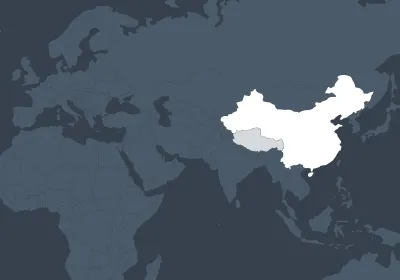
On 22 October, Freedom House published its 2026 Freedom of Network Report.China won only nine out of 100 points in the score system.As in the previous year, it was included in the “unfreedom of the network” category, and was located between the lowest sub-regions of the present assessment.23 October, Voice of America, Chinese versionThe report was further reported. Why is a country with a large Internet population, leading in payments and business platforms, given only a single digits in the network rights assessment of independent research institutions? The answer cannot be found in mobile penetration or network bandwidth, but rather in the question of who decides who public information can be distributed and at what cost the person challenging it will bear.
The report covers the period from June 2025 to May 2026, and the report covers the period from June to May 2026.Only 38 countries were assessed in 2026A further 34 countries have suspended coverage, so that this year ' s ranking cannot be compared directly with all countries that have been in the past. Among its three indicators, China received 7/25 points for “network access barriers”, 2/35 points for “content restrictions” and 0/40 points for “user rights violations”. In particular, the last zero points, a comprehensive assessment by research institutions of the protection of the rule of law, cyber-speech sanctions, anonymous communications, privacy surveillance and platform data collection, does not mean that every Chinese Internet person has no legal interest at all in any situation.
& 0 refers to a risk and relief gap. Freedom House China Country PageThe cases of legal or extra-legal consequences for the transmission of news, the discussion of religion and communication with relatives and friends abroad were cited, as were the sentences of human rights lawyers and journalists for the activities of the network. The cases and information cited by the institution included the situation of the lawyer Xieyang, the journalist Zhang, and others. Whether or not it agrees with the full evaluation criteria of Freedom House, any system that allows expression and independent judicial oversight should explain: what kind of ordinary cyber-operations touch upon criminal punishment, who decides to delete the seal, and whether the person being dealt with is informed of the reasons, has an effective complaint and has an independent decision.
Another almost equally striking figure is the content limit of 2/35. It does not mean that there is no discussion on the Internet in China, but rather that social platforms, short-visual and commercial media produce a daily mass of content; It indicates that the intensity of the constraints arising from review, deletion and content manipulation in the area of contentious political issues, accountability of public institutions and organizational mobilization is assessed by research institutions as extremely serious. The overall flow of information and the range of public issues available for discussion are two different things. People can be online all day, but it is still difficult to keep an official-calibre survey, statement of association or civic initiative for long periods.
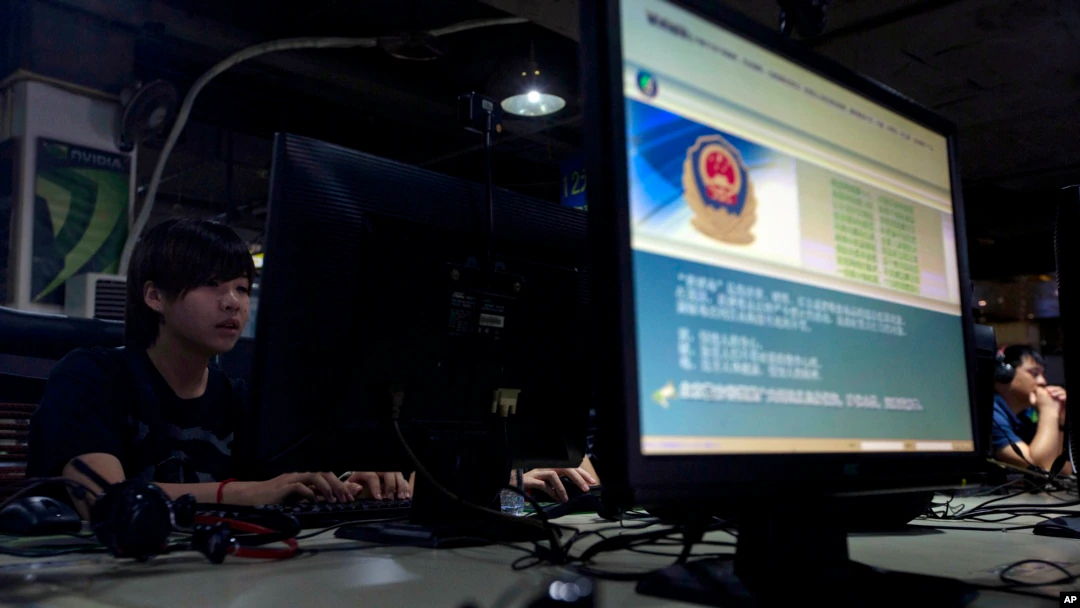
The firewall not only prevents external information, but also makes internal error resolution more difficult. Report reviewIn August 2025, there was a network connection anomaly in China for about an hour., to cite technical studies that may be associated with the “Flammation Great Wall” allocation error. This is a possible reason for the technical analysis, not an official recognition by China of the failure of the vetting system. A practical problem arises: when Internet access and content filtering are superimposed on the same large-scale control system, a single configuration error may also affect users far more than the subject under review.
The deeper institutional costs are the erosion of social accountability. A person who finds that the factory is underpaid, that there is a local financial error or that the judicial process is unfair could have been proved by means of a network of cross-checks between the parties, the media and the administrative authorities. If the Platform first considers how to circumvent sensitive language, complaints and penalties, then public institutions may have to face not continuous monitoring, but rather an isolated complaint that is difficult to retain. The advocacy sector need not disprove criticism by article, but it can reduce society ' s long-term ability to correct errors by increasing the cost of dissemination and sustained record-keeping.
Freedom House does not claim that only China tightens the freedom of the network.2026 report, global network freedom has declined for the sixteenth consecutive year.(a) The use of the Internet; Sixteen of the 38 countries covered by this event have deteriorated and eight have improved. The report is concerned about the digital segregation between Iran and Russia and looks at the digital controls introduced by different countries on the grounds of age certification and artificial intelligence governance. Protection of minors, combating fraud and preventing abuse by AI can be legitimate public objectives, but each measure must answer questions of necessity, proportionality, transparency and independent oversight, and cannot justify the expansion of the right to surveillance and the right to be removed indefinitely.
The official Chinese cyber-governance narratives emphasize cybersecurity, social order, the protection of minors and the fight against rumours, which have a public interest basis; But the public interest does not mean that the executive branch can decide all the boundaries of the discussions without external constraints. It is difficult for the public to verify that power is abused if the regulators set the scale, carry out the deletions and penalties and have access to the remedies. For ordinary netizens, what is most important is not a “clean-up cyberspace”, but a legitimate criticism of whether it is possible to retain the disputed account number, whether it is effective to appeal, and whether the manager must also provide evidence and evidence.
9 points are not a report card on the technological capabilities of the Internet, but rather a warning message on how power is allocated to information. China could continue to build faster networks, more computing and more sophisticated artificial intelligence platforms; But what really determines whether citizens can use the Internet to monitor public power is whether independent reporting will remain, whether critics of the Government have legal protection, whether administrative review is subject to independent remedies, and whether any punishment must be based on verifiable facts and legal grounds. The digital industry flourishes and cannot be a substitute for public expression and rights guarantees.
Article discussion
Verified members can discuss this report publicly and manage their own content.
Checking member sign-in status…