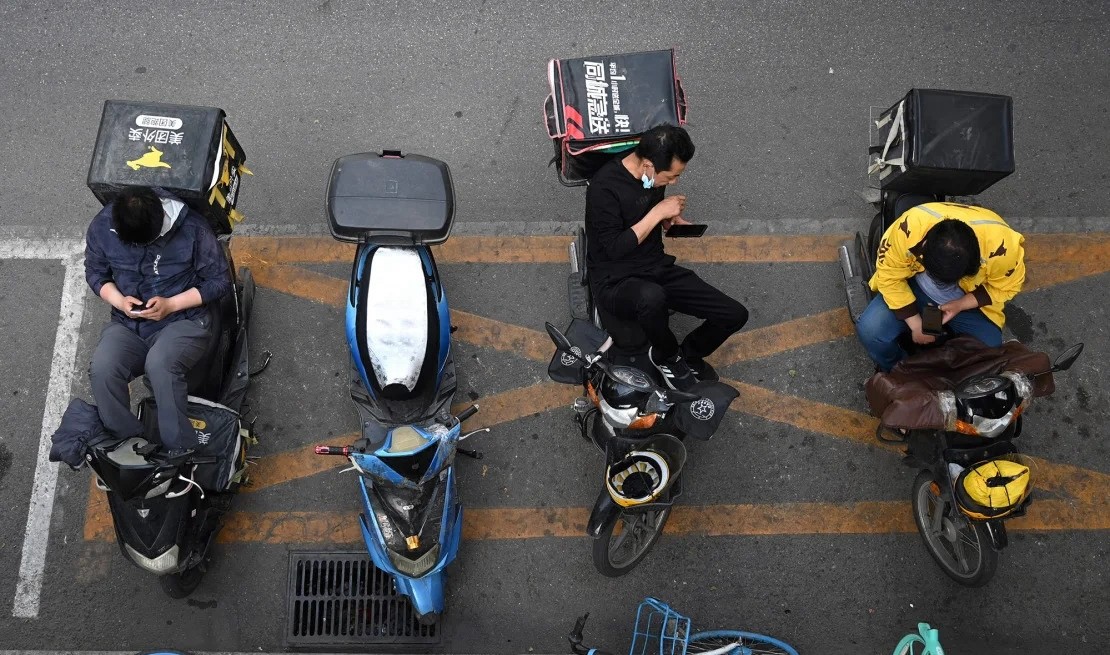
The Chinese out-sale industry is moving from a job buffer to a more competitive market for workers fighting for low-cost orders. Recently, a video video of a number of out-of-home riders filming their own videos has been a source of interest. The riders complained about the fall in the order and income, and some were bluntly told that it was difficult for the packers to earn $200 a day today. Meanwhile, China continues to experience pressure on manufacturing workers and high youth unemployment. Xi Jinping The difficulties faced by ordinary workers have been overcome from finding stable jobs to the low-threshold, zero-worker employment.
The hand-off riders wait on the streets and hard work is hard to earn
This video, which lasted about 16 minutes, recorded the true reaction of several riders to the decline in income.
One rider laments the camera: "The pack is running 200 now. “The other rider, speaking frankly, had little or no order for the afternoon hours of Beijing. The video also shows a large number of riders gathered on the street waiting for platform billings.
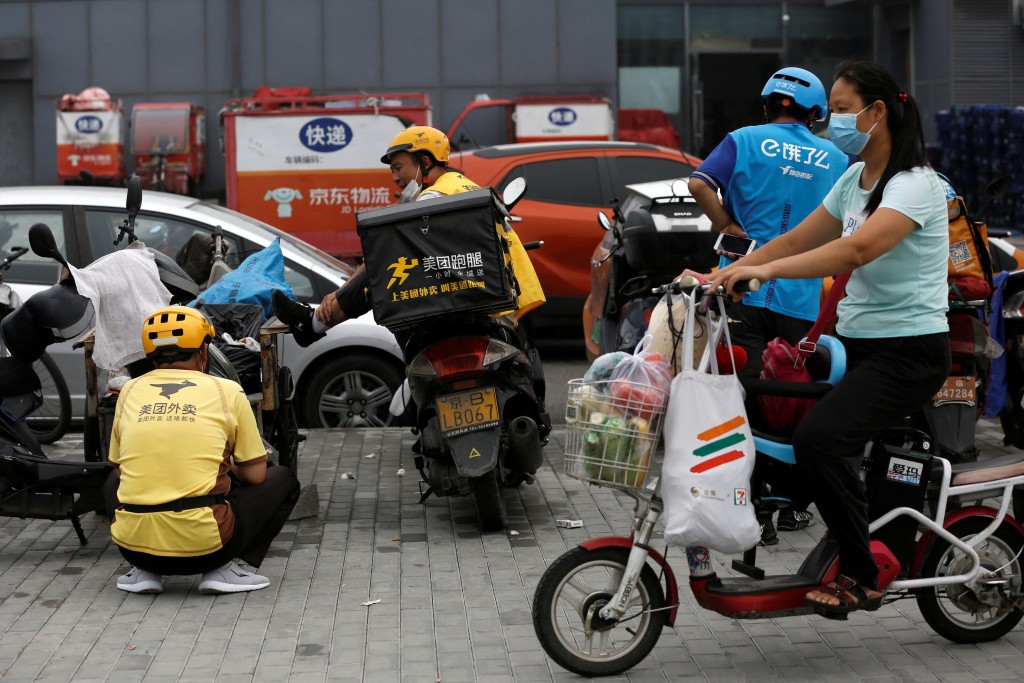
In the past, out-of-home deliveries were considered by a large number of unemployed persons as a temporary way of subsistence. Where there is an electric car, a smart phone, you can enter the industry and earn income through long working hours. However, as more people enter the distribution market, the pattern of labour and time for income also begins to experience double squeezes from inadequate orders and falling distribution prices.
This change has been confirmed by a survey of the Chinese media.
On 28 July 2026, the Daily Economic News reported that Beijing ' s many pack riders had indicated that some orders could be delivered at a cost of $8 to $9 during the war on the subsidy of the delivery platform in 2025, while many orders had been reduced to $3 to $4 by summer 2026.
In an interview with Jollin, the rider said that at the same time last year ' s midday peak, it was possible to complete about 28, and now only 13; Seventy-eight copies were distributed throughout the past day, and only about 40 copies are now available. The journalist saw him start work at 8 a.m. and after seven hours the platform showed only $124 in revenue.
原始来源 · nbd.com.cn《每日经济新闻》:外卖大战停火,众包骑手单量及收入双重下滑记者郑欣蔚编辑何小桃杨军杜恒峰校对金冥羽众包骑手王平(化名)的左腿上有一块擦伤,是午高峰送餐时急着赶路和一辆卖莲子的三轮车相撞留下的。“当时刹车刹不住就撞上了。”他抬起腿给《每日经济新闻》记者(以下简称每经记...nbd.com.cn ↗Another rider revealed that he could not earn even a dozen dollars for some hours. The reduction in income has forced riders to work longer hours, but it remains difficult to ensure the number of orders.
From factory, self-employment to out-sale, unemployed people continue to be pushed into low-threshold industries
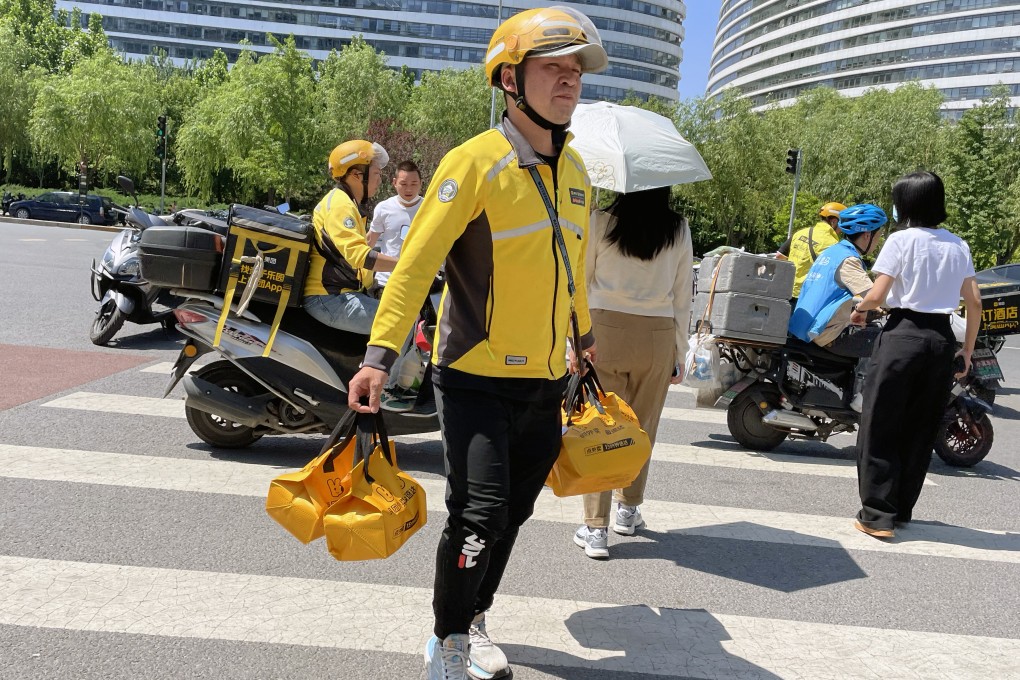
The crowded distribution market is not only backed by price competition between platforms, but is closely related to the overall employment pressure in China.
Manufacturing, construction and services have long absorbed a large number of urban and rural workers. When traditional jobs are reduced, out-of-pocket, express delivery and Internet transport become important employment options for unemployed, business losers and those lacking stable incomes.
According to the Cycling Survey published by the American Academy in 2026, 51.1% of the horsemen interviewed were workers before the take-out was delivered, 24.3% had been active and 11.3% were unemployed. This means that the out-of-service industry is not just a general shift, but also a large number of workers who need to re-establish their sources of income.
Economic pressures are also reflected in official statistics.
The National Statistical Office of China (NSO) released on 31 October that the manufacturing procurement manager index (PMI) dropped to 49.3 per cent in October 2026, below the 50 per cent expansional contraction line. Of these, the medium-sized enterprise index was 48.4 per cent, small enterprises only 47.5 per cent and manufacturing workers 48.4 per cent.
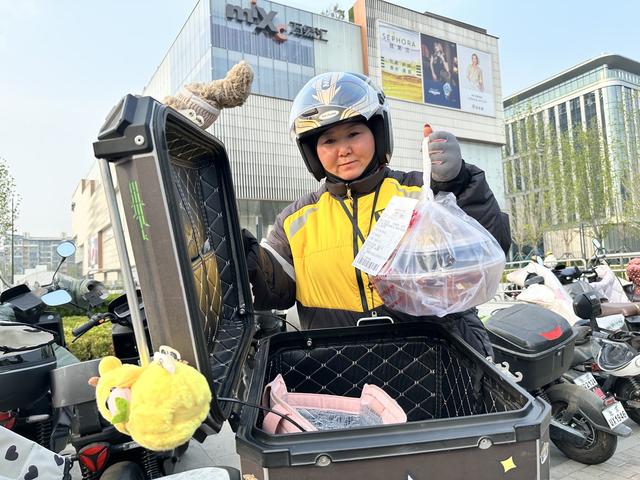
In September, the unemployment rate of the labour force, excluding school children, in towns and cities nationwide reached 18.0 per cent, which, although falling back in August, meant that a significant proportion of young workers could not find employment.
These data reveal a reality: employment pressures in traditional industries, young people finding it difficult to stabilize their jobs, and the flexible job market that has absorbed the unemployed are also experiencing overcapacity and a decline in income.
For workers who lack savings, bear household expenses and debt, the simultaneous pressure on different areas of employment means that the space for re-establishing their livelihoods is further reduced.
Platform controls orders and prices, while income risk is borne by riders
The export industry apparently provides free orders, flexible employment opportunities, while real income is highly dependent on the Platform ' s orders allocation, distribution pricing, algorithms and rules of reward and disincentive.
The rider cannot decide on the price per package, nor can he have a logical understanding of the distribution of orders. When orders are reduced, workers can only increase their online time, gain access to peak time distribution or join different platforms at the same time.
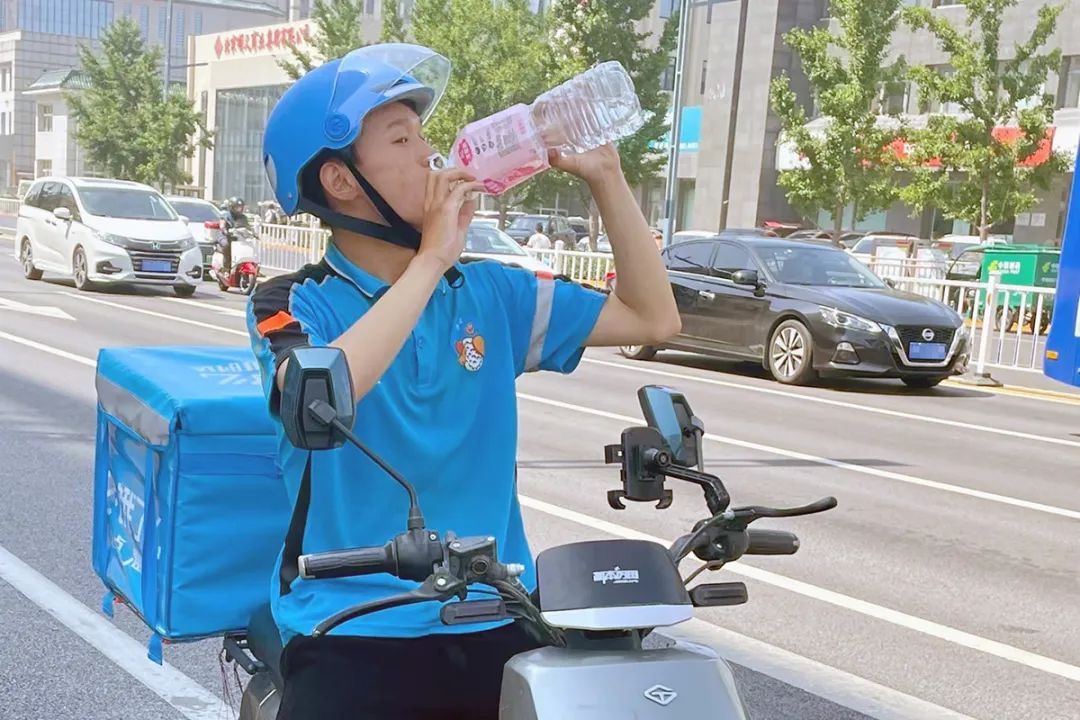
In August 2026, a survey published in news bulletins noted that some riders were not only experiencing a drop in distribution prices, but also a reduction in distribution time, tightening of platform rules and increasing working hours. Originally promoted as flexible and free work, there is an increasing reliance on the Platform ' s established scheduling, tasking and appraisal mechanisms.
In addition to the decline in income, the more serious problem is labour security.
In August 2026, Beijing issued a five-year follow-up report to the Centre for Legal Aid and Research of Peasant Workers on the Determination of Work-Employment Relations for the Immediate Distribution Platform, analysing 642 judicial decisions, and revealing that some of the Platform ' s distribution systems have made it difficult to identify the employers who are actually responsible for injuries to or labour disputes when they are exposed to multiple layers of outsourcing, the splitting of contracts and pay-outs.
Although Chinese authorities have promoted the protection of the rider ' s occupational injury and social security benefits, there are still real obstacles to the way in which the coverage, income thresholds and labour relations are determined. For the crowd of cyclists with unstable orders and low incomes, inadequate social protection further increases the risk of household livelihood.
Xi Jinping The Government emphasizes job security while the bottom workers bear the cost of economic adjustment
The Chinese Government has repeatedly emphasized job security, domestic demand expansion and the development of a platform economy in recent years, and has made new forms of employment an important channel for labour-absorption.
However, the market for out-of-pockets is exposing the limitations of this employment absorption.
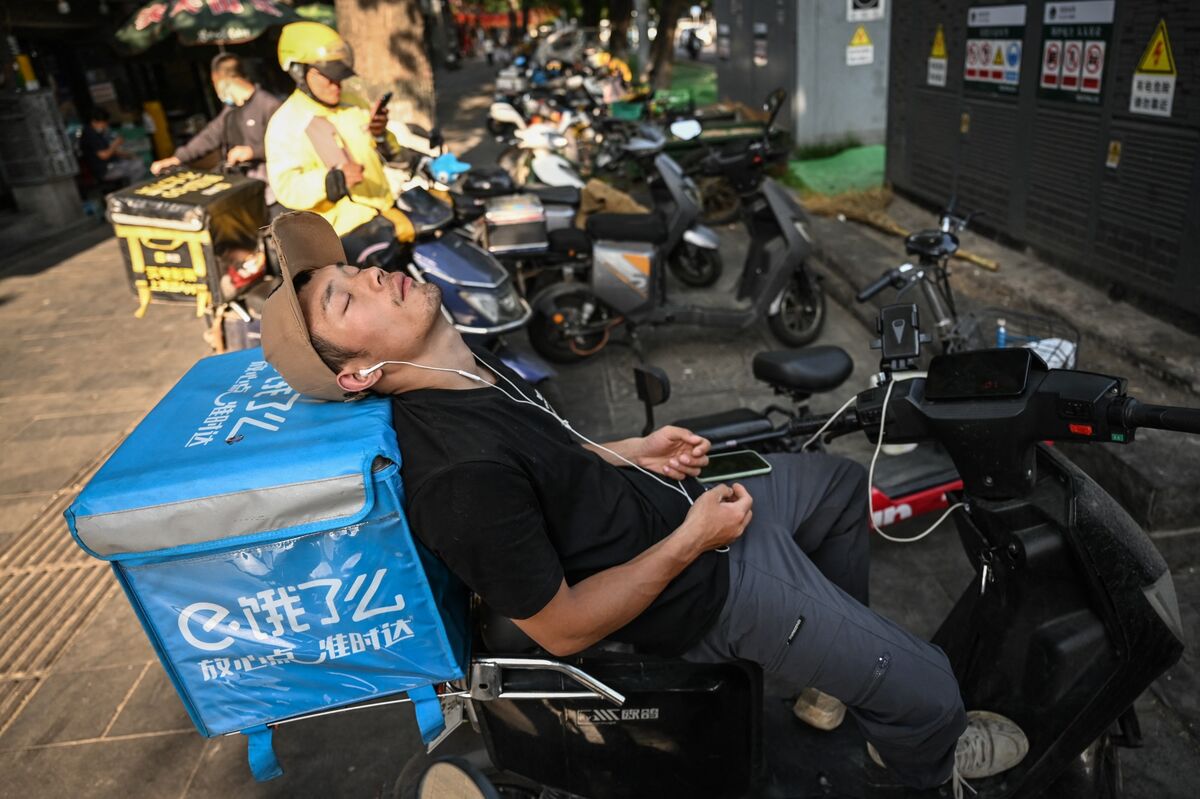
Low-threshold industries can temporarily accommodate the unemployed, but they cannot create unlimited demand for orders in a vacuum. Competition among workers is further exacerbated when more people enter the same market and income does not rise in parallel.
The 2025 HS subsidised the war with a short push to raise part of the rider ' s income and attracted a large number of new entrants. With the withdrawal of subsidies, the order volume and the distribution unit price have fallen, and previously expanded riders have begun to distribute limited orders. The platform competes for market costs, which eventually translates into precarious incomes for workers.
The deeper systemic problem is that China ' s employment policy has long relied on economic growth and the absorption of labour by market-based actors, while unemployment benefits, income security and platform-based labour responsibilities for low-income groups still lack sufficient protection.
Yes. Xi Jinping Under the dominant system of economic governance, the Government has both industrial policy, employment policy and labour regulation powers, as well as public responsibility for safeguarding the basic livelihood of workers. When the job-creation constraints, difficulties in finding jobs for young people, and the low-threshold market for casual workers are overcompetitive, requiring more diligence and flexibility on the part of workers alone, does not solve the structural and systemic problems of economic structure and labour security.
The last resort is narrow
The experience of the delivery riders has gone beyond the decline in income in an industry.
Some workers have moved from factories to services, from self-employment to platform distribution, and even to multiple jobs. They constantly lower their employment expectations in exchange for longer working hours in exchange for limited income. At the same time, housing, medical care, child education and old-age expenses do not disappear as a result of a reduction in the number of orders.
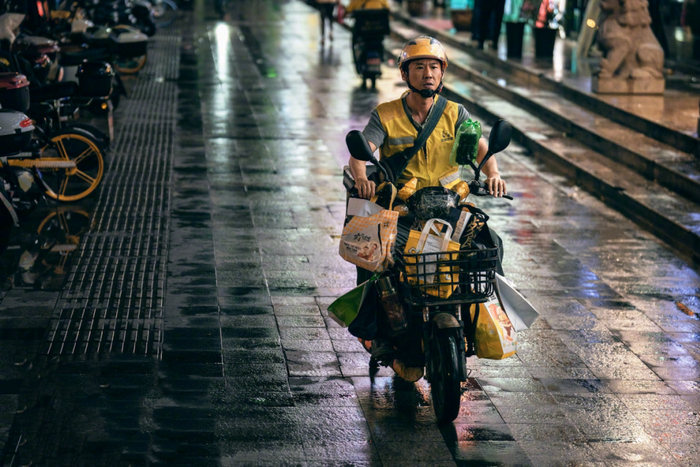
The fact that the export industry still has skilled riders who can earn a higher income does not mask the situation of low-income and precarious workers. A society with a large employed population cannot prove the improvement of livelihoods by simply increasing the number of flexible employment, but it is more important to focus on how much real income workers can earn and whether it sustains basic family life.
When ordinary people lose their jobs, it becomes increasingly difficult to earn a living even on electric cars and physical power. Xi Jinping The gap between economic growth and the real lives of ordinary families in China is clearly present on the streets on the riders waiting for orders.
They need more than more orders, but also social security that can sustain a normal life in terms of income from work and a real role in unemployment, injury and old age.
Article discussion
Verified members can discuss this report publicly and manage their own content.
Checking member sign-in status…