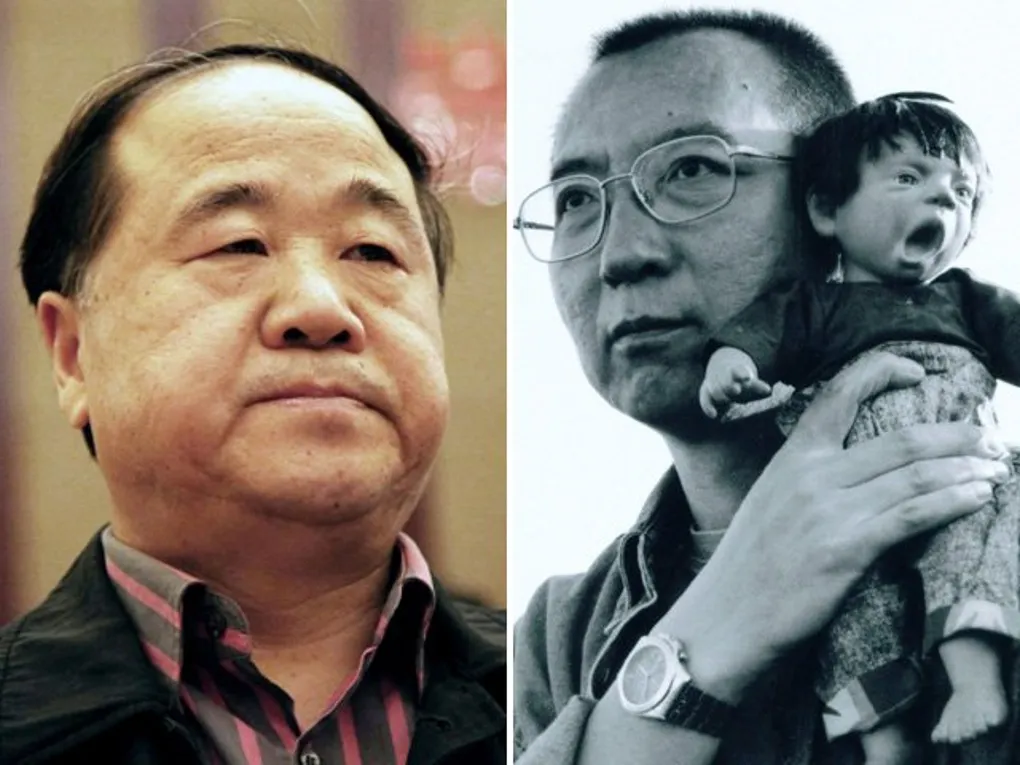
The same Chinese writer, who also came to the Nobel Prize, reached a completely different conclusion.
After leaving China, Takahing received the Nobel Prize for Literature, and the work was not published properly in mainland China for a long time; Liu Xiaobo was serving a sentence when he received the Nobel Peace Prize, leaving only one empty chair at the ceremony; The Chinese writer, who has been awarded the Nobel Prize for Literature and who has long lived in mainland China, is also the first to be a Chinese writer.
The three life trajectories are combined, and more directly than any abstract “literary and political” discussion, to suggest that under the CCP there is no one safe distance between writing and power.
原始来源 · rfa.org当文学遇上审查:高行健、刘晓波与莫言rfa.org ↗H.H.I. chose to leave, so the work disappeared from China.
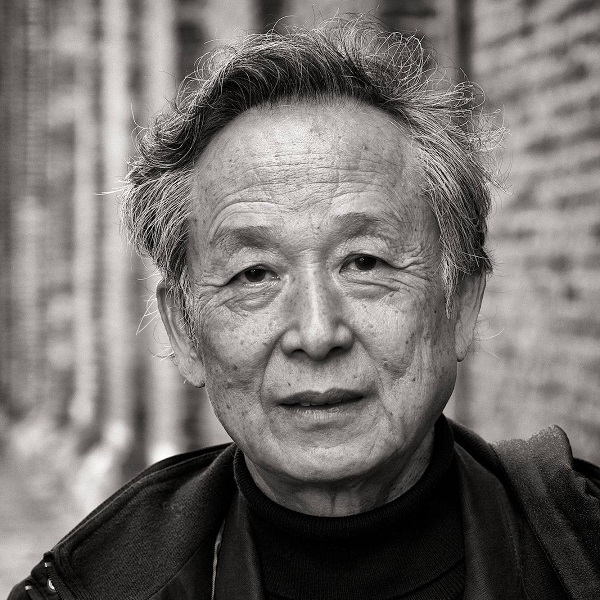
In 1986, the high-powered play " The Beyond the Coast " was banned from playing on mainland China. After six or four years, he withdrew from the CPC and wrote " Runaway ", which was in the context of the political repression of 1989.
By the time he received the Nobel Prize for Literature in 2000, the works of Leung Hill, the Bible of a Man, were still not available for regular publication in mainland China. The Swedish Institute acknowledged his literary achievements, but Beijing did not take the success of the Chinese writer as a national honour.
High mobility is the choice to take the writing out of the State permit. His price was completely separate from the mainland Chinese publishing system and official cultural resources.
Liu Xiaobo did not leave, so the criticism went straight into the judgement
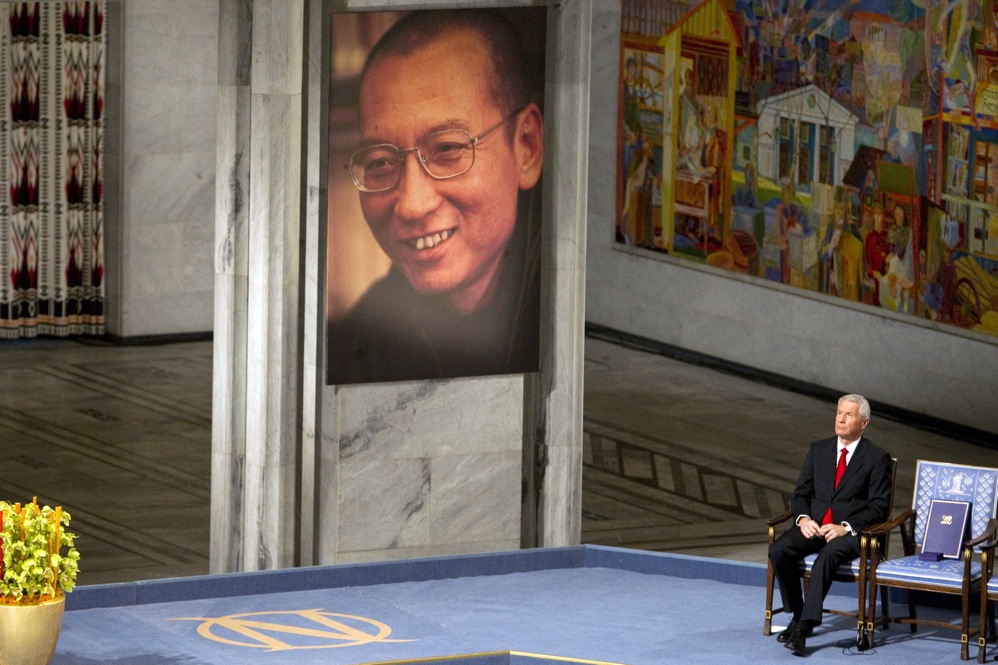
Liu Xiaobo is going another way.
He participated in the drafting of the Charter and openly advocated constitutional, democratic, human rights and political reform. In 2009, he was sentenced by the Beijing court to 11 years' imprisonment for “inciting subversion of State power”, and his articles and public initiatives were directly classified as evidence of a crime.
One year later, he was awarded the Nobel Peace Prize.
The empty chair on the Oslo medalboard later became an age-old political symbol: not because Liu Xiaobo was absent, but because a State regime did not allow the winners to stand there themselves.
In 2017, Liu Xiaobo died of liver cancer in custody. He was not truly free until the final stages of his life.
The controversy then focused on “How a writer lives with censorship”
In 2012, Moo-sang received the Nobel Prize for Literature. Compared to Gao Jian and Liu Xiaobo, he has long-standing relations with China's association, the official publishing system and mainstream cultural institutions.
The biggest controversy surrounding this is never whether he has any literary value, but rather what public responsibility he has to shoulder in the face of China's censorship and political persecution.
He had compared the review to airport security, which had given rise to extensive controversy. Supporters argue that literature should not be reduced to political expression, while critics argue that in a country where writers are sentenced to 11 years ' imprisonment for words, a review is itself a political choice as a necessary examination.
The three individuals thus contrast with the high-powered exit system, the positive challenge system of Liu Xiaobo and, in a word, the maintenance of creative space within the system.
The real question is not “Writers Should Not be Politicized”, but why power determines the conditions under which literature survives
The CCP propaganda system often used “literacy not to be politicized” as a justification for the silence of independent intellectuals, but the State itself never let literature out of politics.
The publication of books, the play, the historical events, the writers who can enter the educational materials and the names that must disappear from the search results are themselves the shape of political power over the literary space.
What Takahaka, Liu Xiaobo and Moo really face together is never an abstract literary and ethical issue, but a system reality: Who has the final say when you write about the boundaries of power?
The Xi Jinping era has more technical and institutionalized cultural control than it was 20 years ago. Publishing houses, platforms, algorithms, schools, associations and communication systems together determine how far a voice can go.
The three Nobel laureates are therefore not meant to provide three sets of “right answers” to subsequent Chinese writers, but rather to prove that, in a system that does not guarantee freedom of expression, each time a writer writes, silences, leaves or compromises, power is redefined as a political act.
Literature can not serve politics, but authoritarian regimes never give up on governing literature.
Article discussion
Verified members can discuss this report publicly and manage their own content.
Checking member sign-in status…