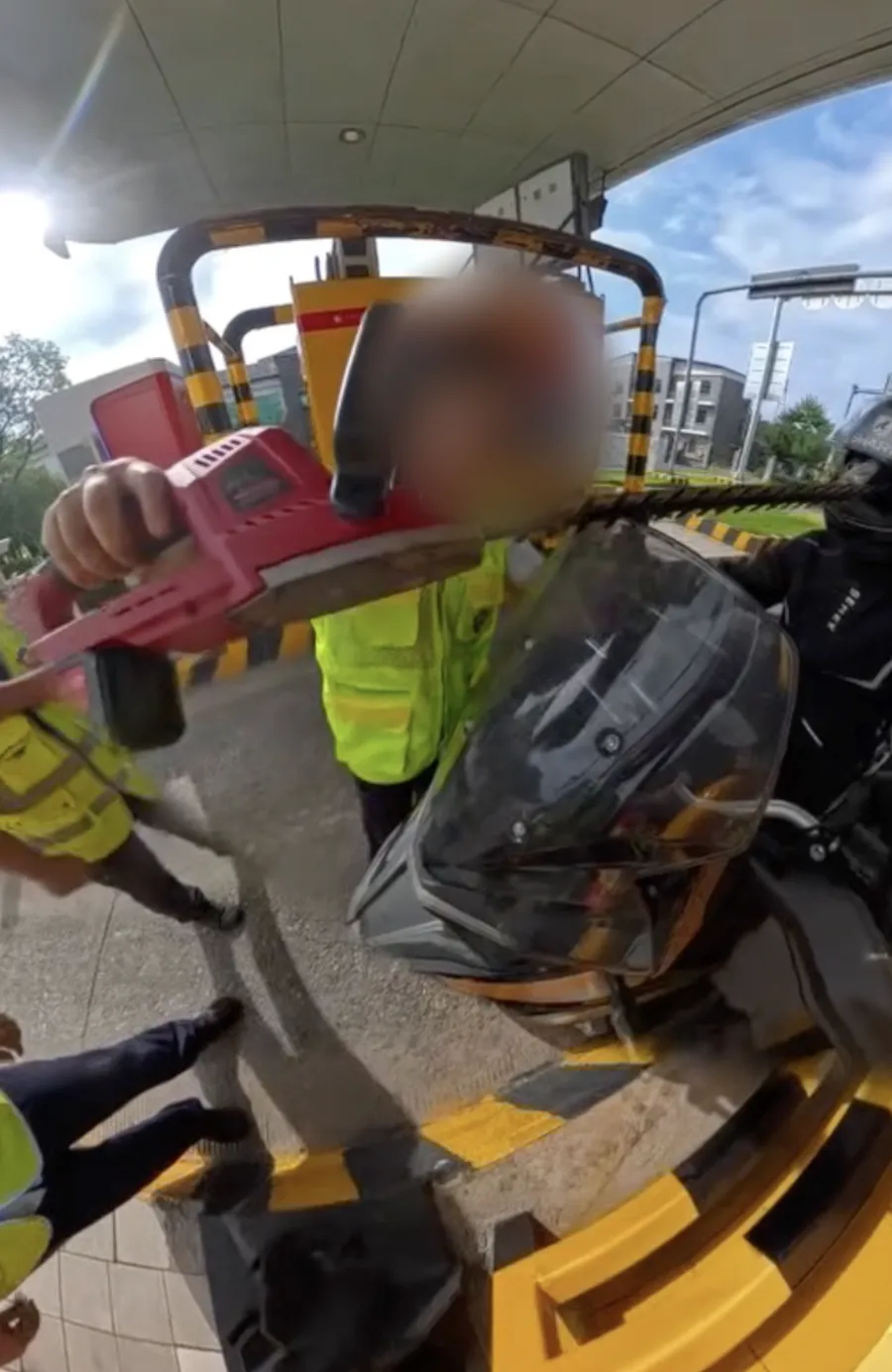
On 5 October, a motorcycle was stopped by staff as it was ready to enter the high-speed station at Nindu, Jiangxico County. live video shows, with one of the staff members holding a green fence that was being used to trim green and approaching the vehicle and once placing it in front of the windshield; In the dispute, the camera equipment on the bike was also removed by the staff. The video was first released on the rider's social account and then quickly spread through the X platform account, which was called "Sere not your teacher".
The incident quickly turned from a debate about “the ability of motorcycles to take a high speed” to another, more specific question: whether the toll-station staff had the power to enforce the interception with dangerous means.
The fact that Jiangxi has been banned from the highway does not mean that the bill payer has enforcement powers
The prevailing road traffic regulations in Jiangxi prohibit motorbikes from entering the highway. The Giandong Management Centre, the transport investment group in Jiangxi Province, which is the parent of Ningdu Fees, also confirmed that the toll station would need to be accompanied by high-speed traffic police to return motorcycles that attempted to enter the high-speed. that the staff member was working on the branch with a green fence because of the "exigency" not laying down the tools and the mishandling of the tree.
It is important to separate the two facts here. (b) Traffic police may deal with traffic officers if they attempt to enter the highway in violation of local regulations in Jiangxi; However, the toll-station staff are not public security traffic police officers, but are required to refuse to release, persuade and report to the police, rather than to expand themselves to carjacking, seizing equipment or forcing them to stop by dangerous means. In an interview with the media, the director of Henan Ze Zelig ' s law firm also stated that the toll-station staff did not have enforcement powers to enforce interception.
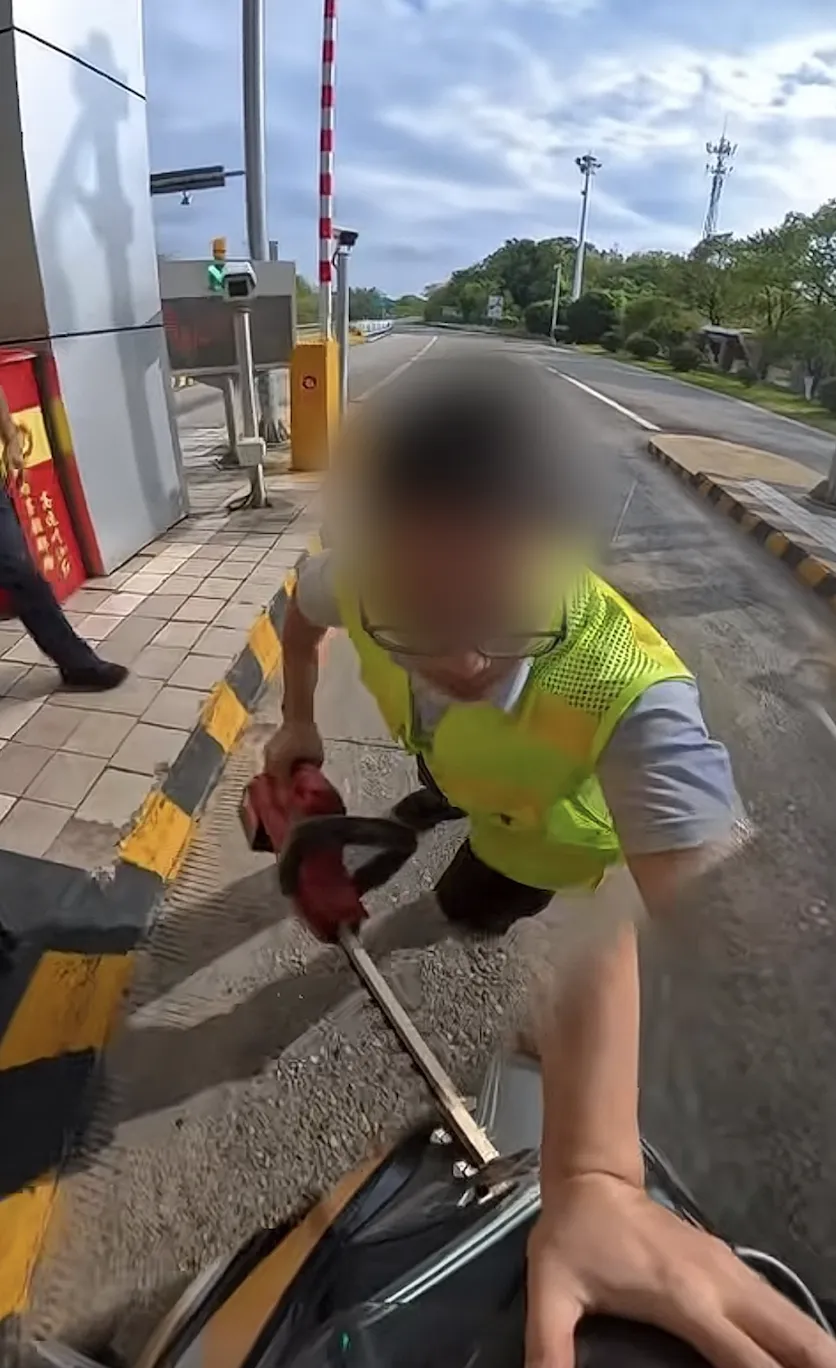
The most public-interesting scene in the video is not the dispute itself, but the seconds when the green fence was pushed to the windshield. A gardening tool, because the holder was wearing a toll station worksuit, was temporarily converted into a “law enforcement device” at the scene. This practice reveals the blurring of power that is common in grass-roots governance: in the face of irregularities, staff members are not thinking of initiating formal processes, but of direct control of the scene with hand-held resources.
Cameras are screwed down, more worth asking
during the dispute, where the rider had removed the camera set up in the car. Even if the rider had a traffic violation, the staff member would not have been granted the automatic authority to dispose of his personal belongings. Whether the equipment at the site was damaged, by whom it was removed and whether compensation was required were issues of fact that could be pursued separately.
Mobile phones and carlogs are increasingly becoming the primary tools for the preservation of evidence by ordinary people in disputes in public places in China. It is also for this reason that “do not film” “do not delete” “take away the equipment” often becomes the node of escalation of the conflict. When a non-law enforcement officer is involved in both interception and contact with equipment at the record site, the procedural risk is further magnified — because what happened afterwards is probably the only statement of the participating agencies themselves.
Officially acknowledged “undue”, but the problem cannot stop with a “urgent”
On 6 October, the Giantong Management Centre responded to media reports that the staff involved had acted inappropriately and that the high-speed traffic police and public security departments had intervened. This response confirmed at least two points: first, the field tools were indeed green fences; Second, the management did not consider this disposal to be a normal work process.
What really needs to be answered is the chain of responsibility. Why do staff members think they can intercept with dangerous tools? Are there standard procedures for the use of motorcycle break-in cards at the toll station? Can staff touch or remove the rider ' s camera equipment? How can management centres train front-line personnel to distinguish between “coordinate return” and “enforcement” borders?
The Ningdu toll station incident is worth reporting not because it is so strange, but because it is backed by a familiar grass-roots logic: the rules themselves may be clear, but the implementers often expand their powers on their own, based on positions, uniforms and field advantages. The level of the rule of law in a society depends not only on the existence of a “stop-to-speed” provision, but also on whether the perpetrators are equally bound by the rules when faced with violators.
If, ultimately, only “staff members are anxious and critical of education”, the systemic issues left by this incident remain unresolved. What really needs to be corrected is not a green fence, but the misperception of administrative convenience as a habit of coercive power.
Article discussion
Verified members can discuss this report publicly and manage their own content.
Checking member sign-in status…